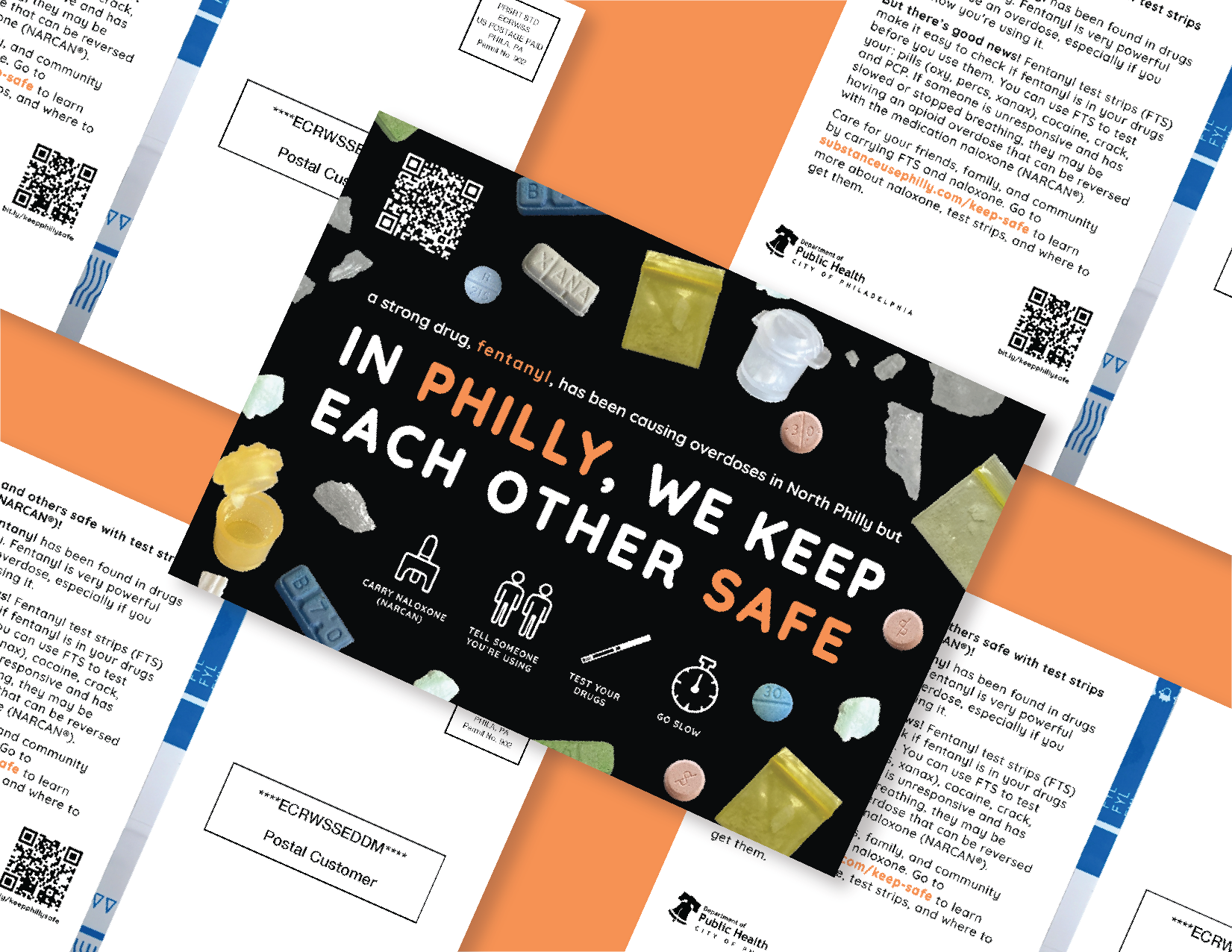
In Philly We Keep Each Other Safe: Fentanyl Campaign
Created for the Substance Use Prevention and Harm Reduction Division (SUPHR) at the Philadelphia Department of Public Health, this project aimed to increase awareness, accessibility, and trust around the use of fentanyl test strips (FTS) in high-overdose areas of the city. The initiative was part of a broader mission to reduce harm and build community resilience during a particularly isolating moments in the COVID-19 pandemic.
Design Process
-
Philadelphia neighborhoods are experiencing rising overdose rates, with many residents unaware of fentanyl contamination in street drugs or how to test for it. Existing harm reduction materials are often generic, stigmatizing, or inaccessible. We needed to:
Educate diverse communities about fentanyl test strips in a clear, respectful, and actionable way.
Build trust through culturally relevant and community-centered messaging.
Improve the distribution and visibility of FTS resources without relying on traditional advertising methods.
-
Data-Driven Targeting
Used overdose and demographic data to identify focus neighborhoods in North, Central, and South Philly.
Partnered with ground teams already embedded in each area to assess tone, accessibility, and local needs.
Community-Centered Messaging
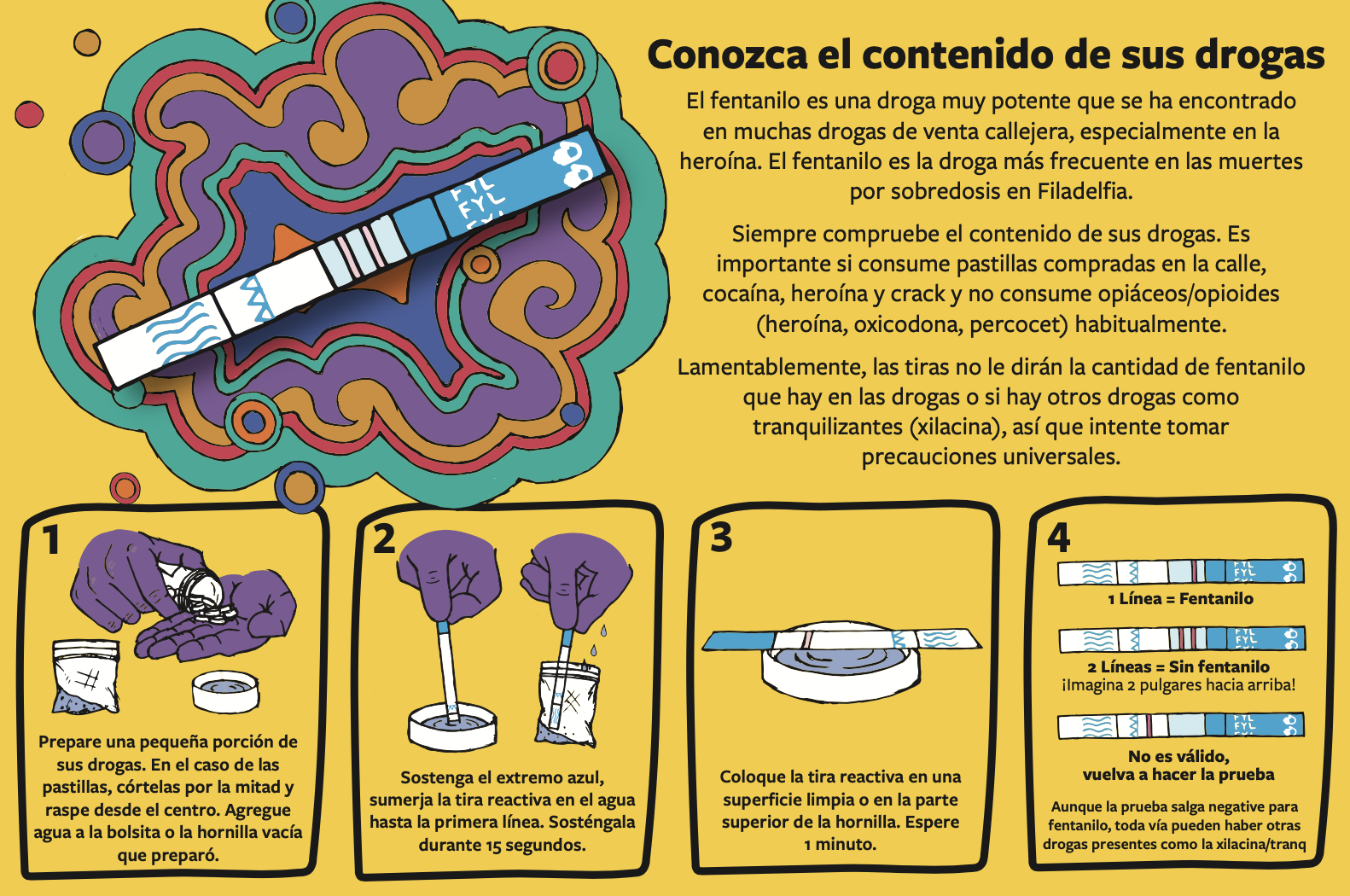
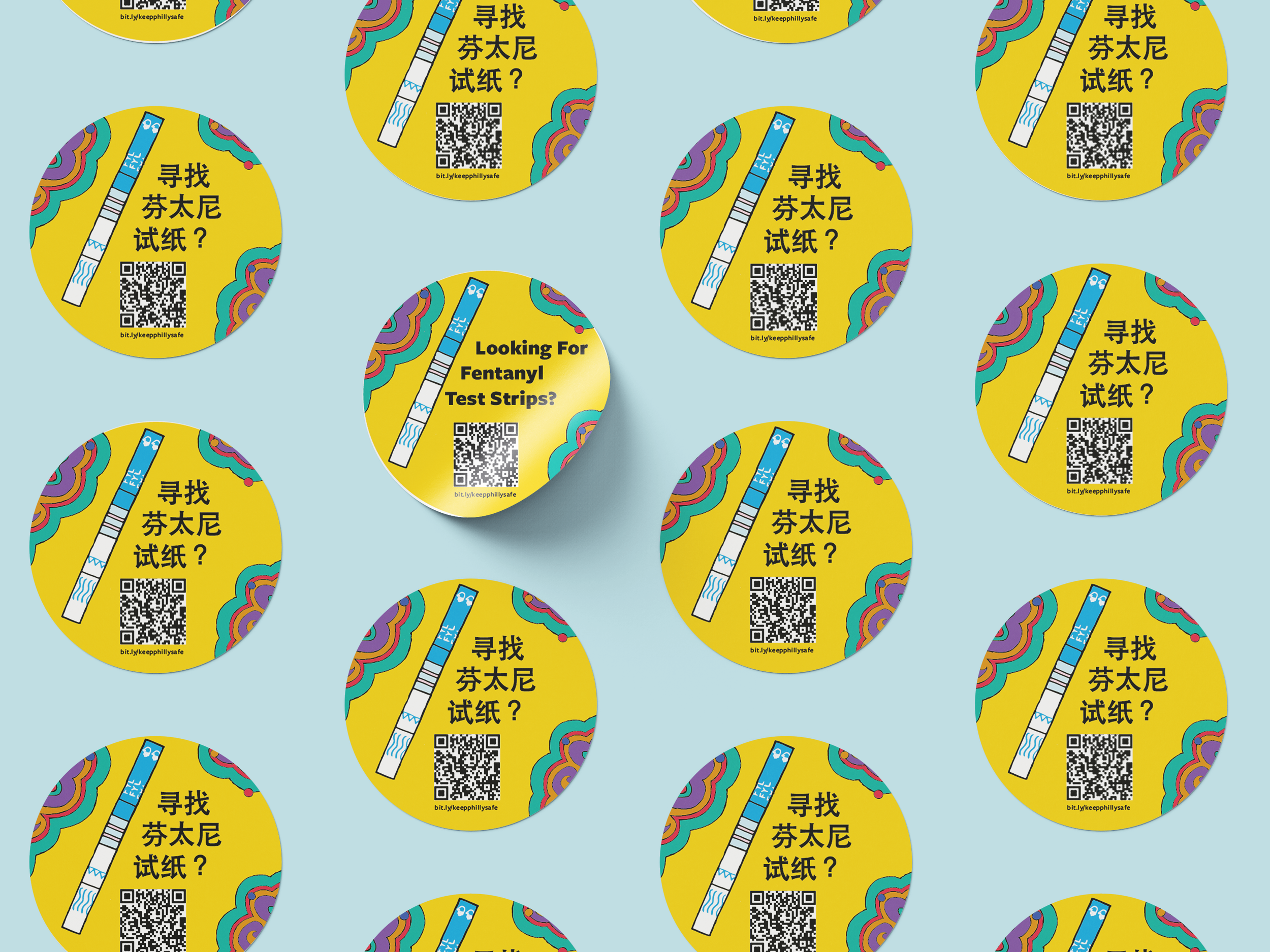
Developed multilingual messaging focused on care, connection, and harm reduction rather than fear or shame.
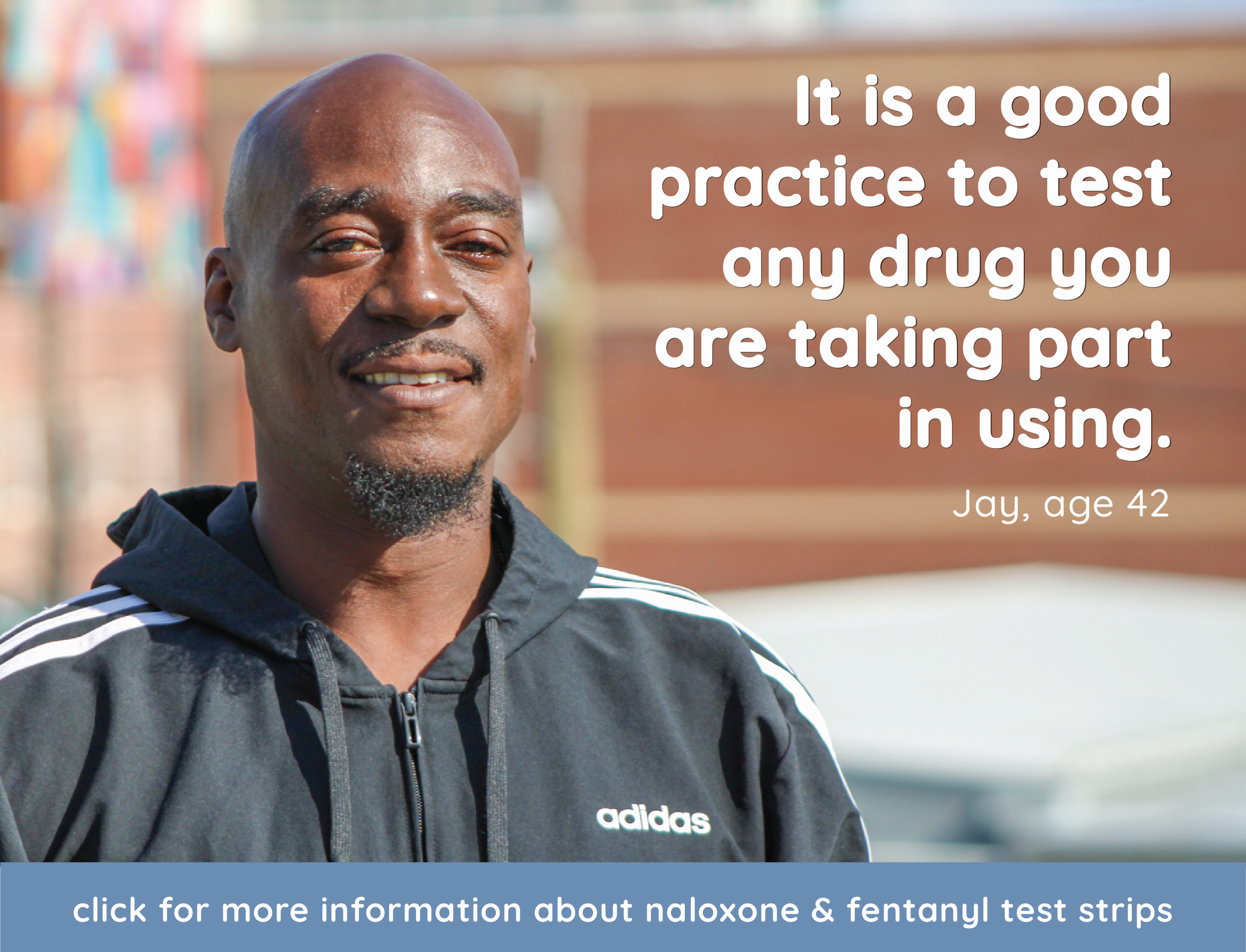
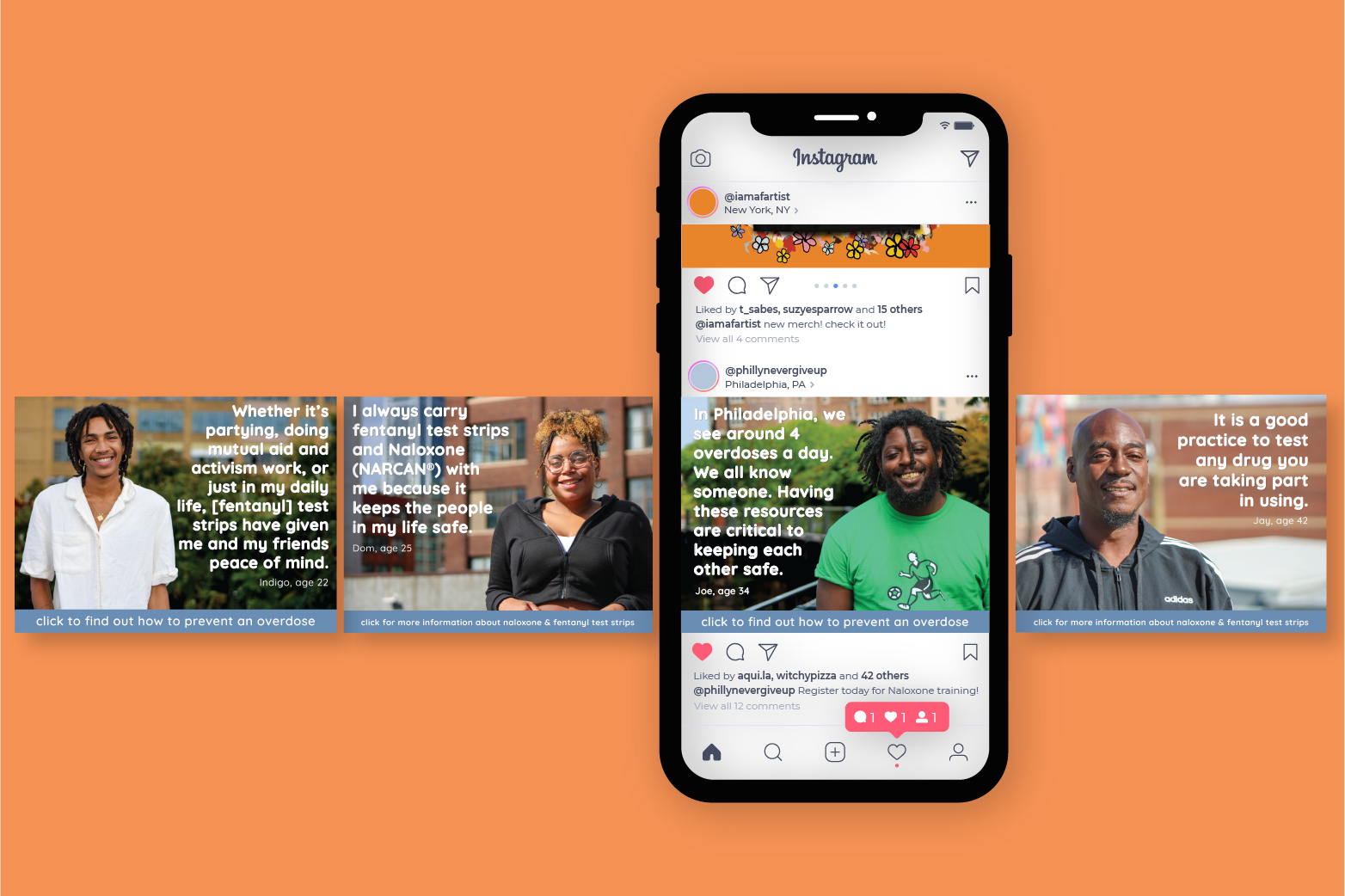
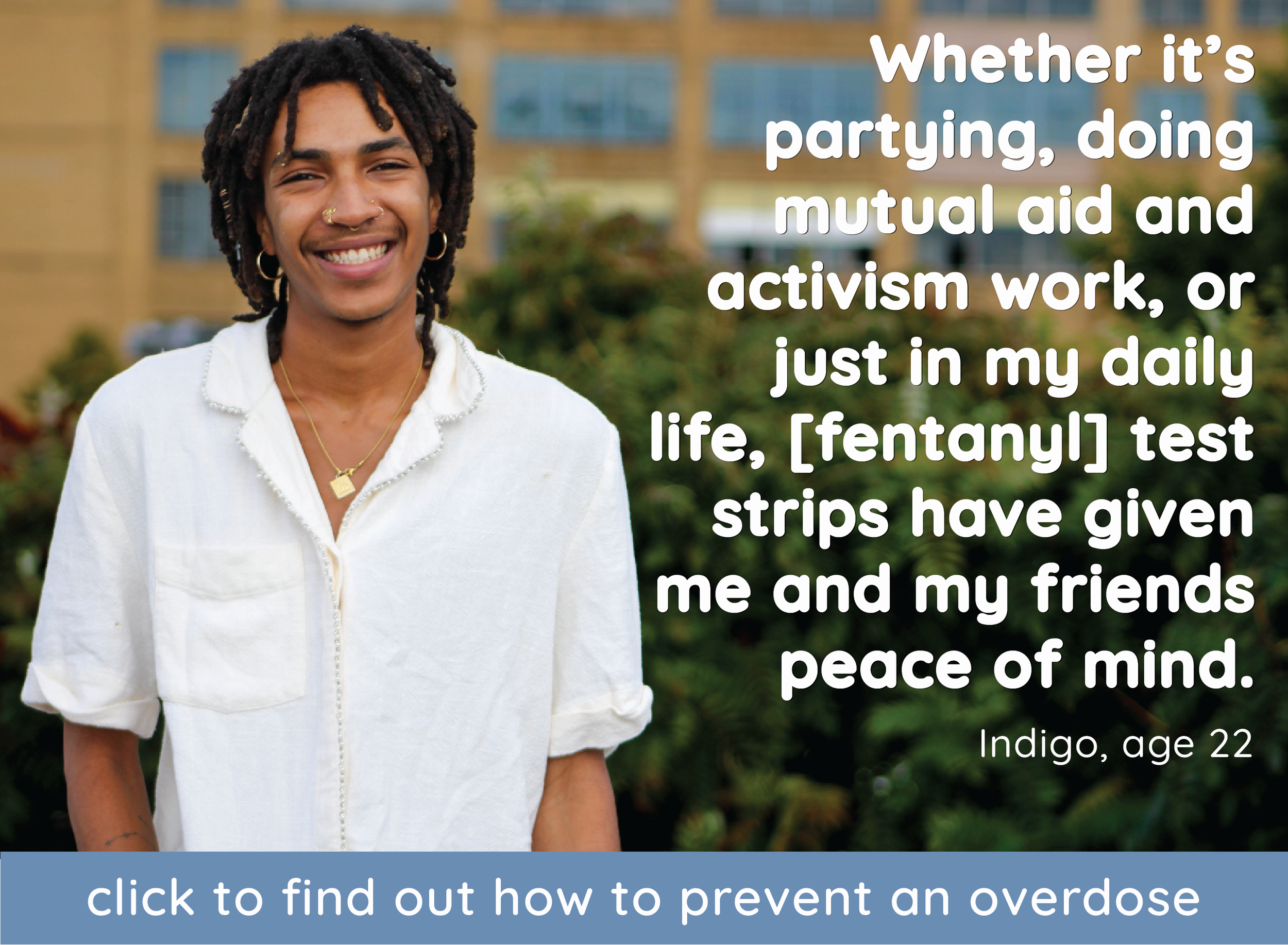
Co-created content with outreach staff and residents; included real quotes and photos for North Philly materials.
Designed three visual directions, each tailored to the tone of a specific neighborhood:
North Philly: Local portraits + quotes to foster connection.
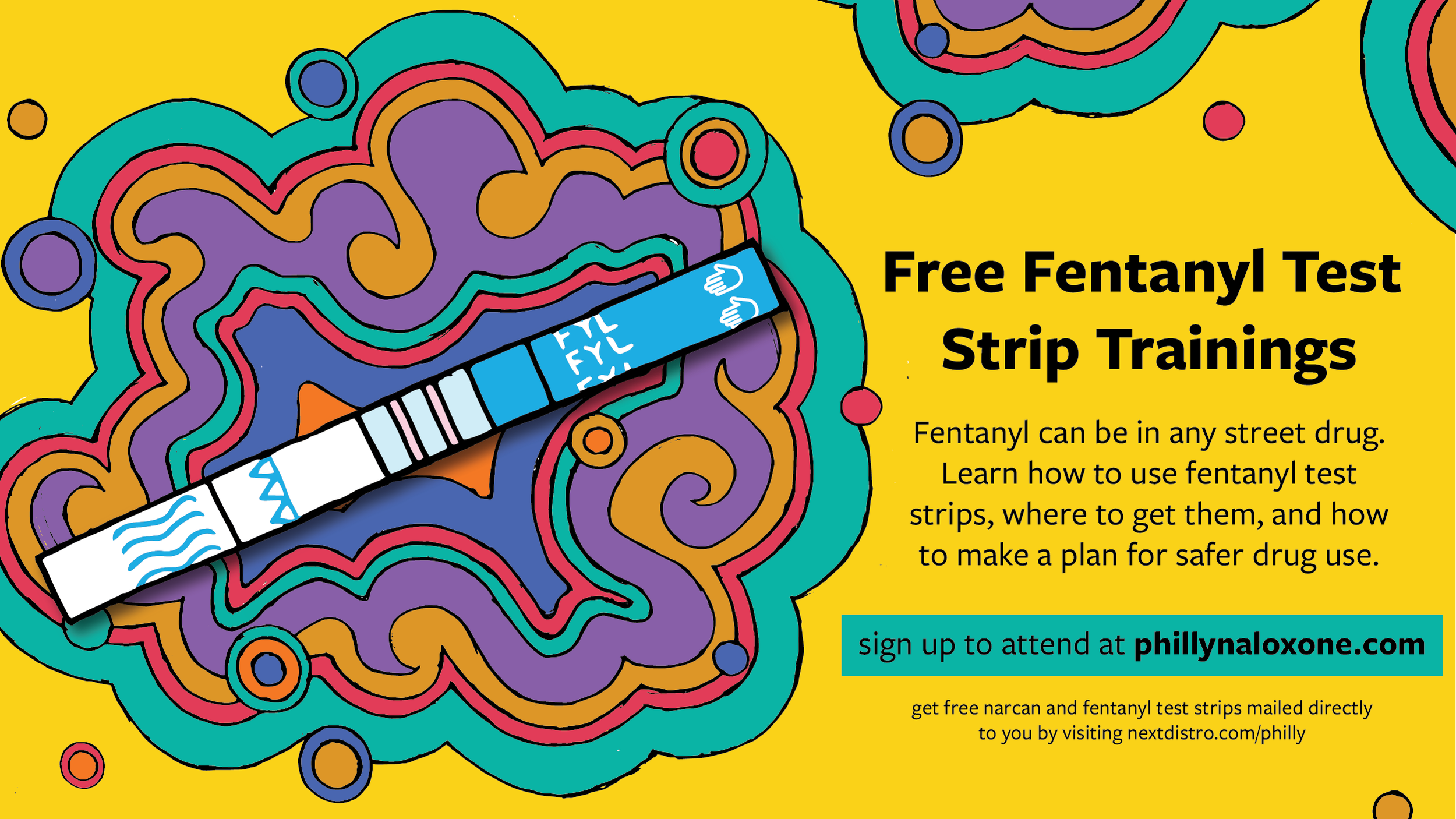
Central and South Philly: Bold, graphic designs drawing from the city’s public art scene. Wheat-paste-style posters and handout zines.
Grassroots Distribution Model
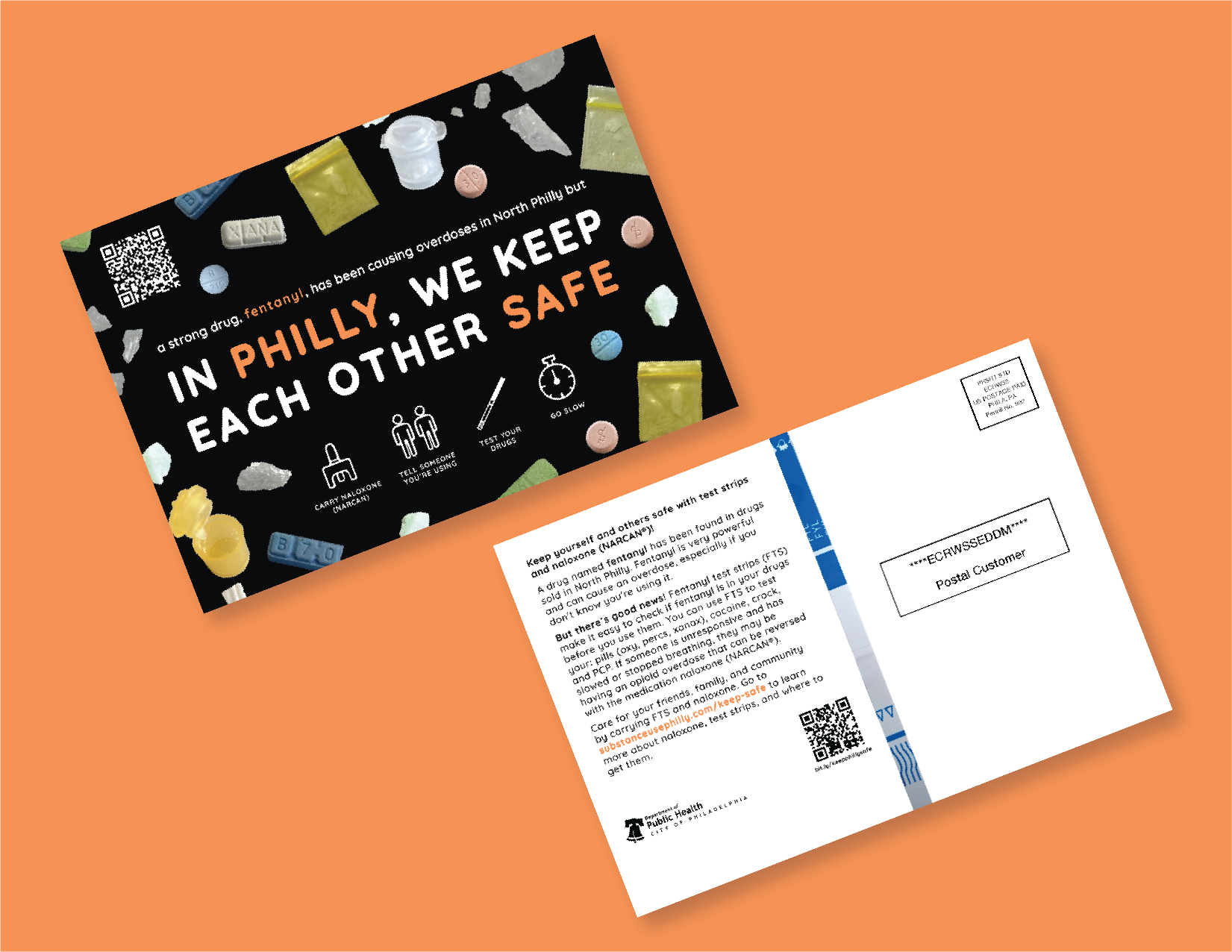
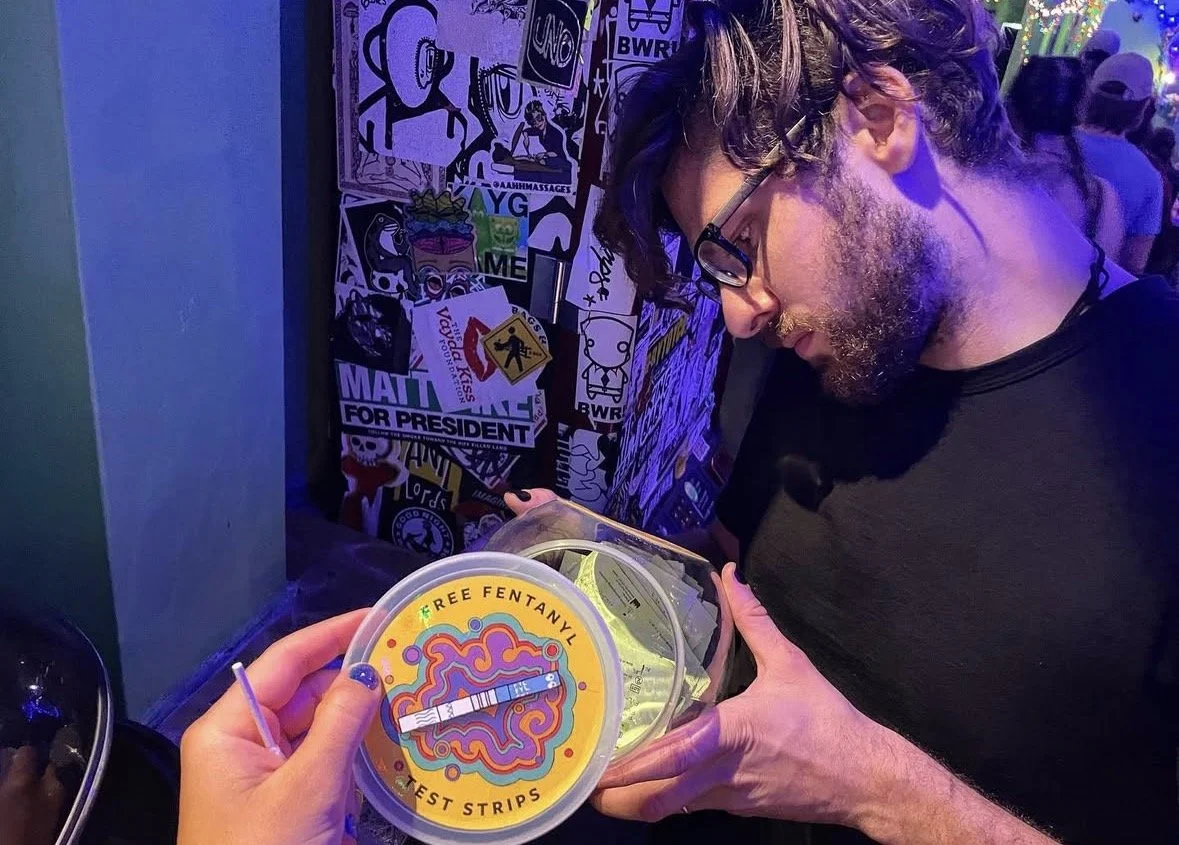
Distributed thousands of postcards, zines, and test strips via local liquor stores, smoke shops, mutual aid groups, and direct mailing.
Included QR codes for digital resources, safety tips, and supply refill requests.
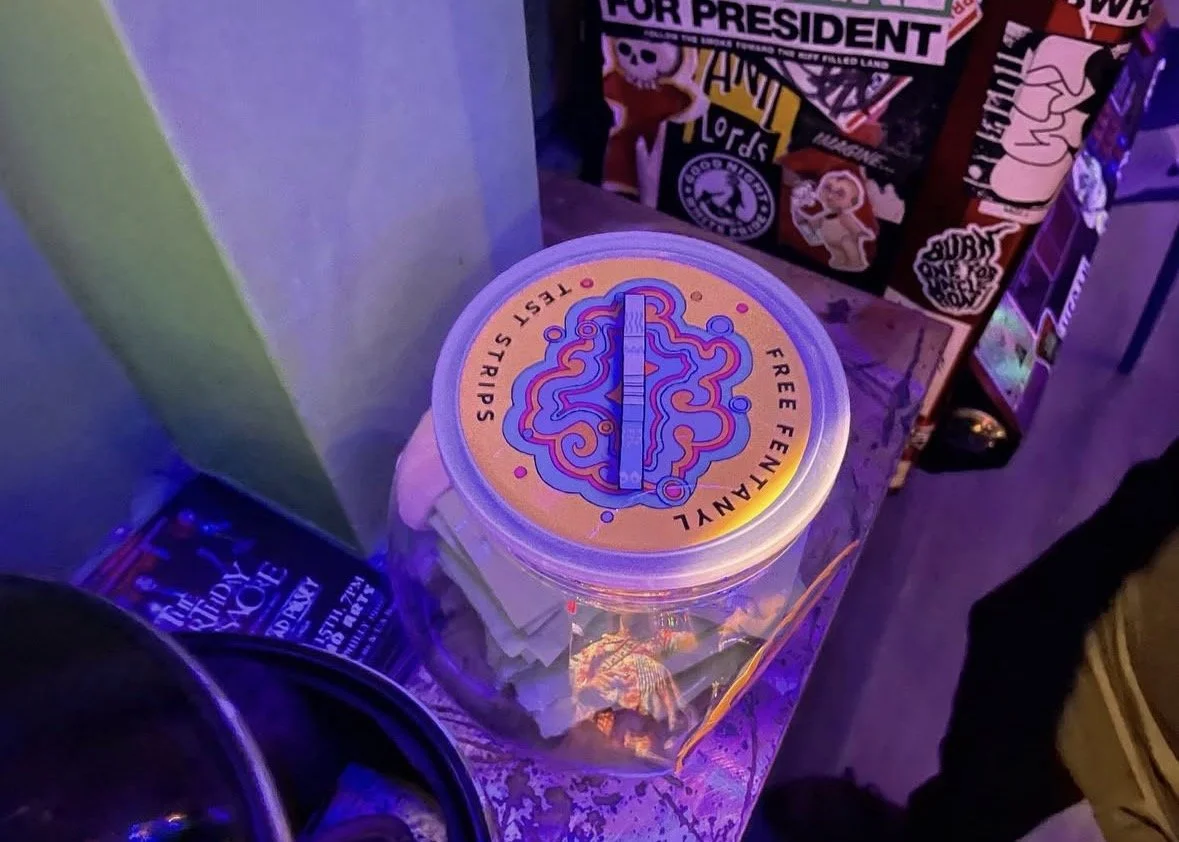
Created info-based sticker labels for the test strip containers themselves, turning each item into a mini-instructional toolkit.
-
A multilayered, hyperlocal harm reduction awareness campaign built on trust and visibility, including:
-
1.5 million people reached
2,000+ fentanyl test strip kits distributed across 3 neighborhoods
3,000+ posters, postcards, and zines distributed
1,400+ QR code scans tracked in the first two months
Outreach team reported increased community recognition of SUPHR materials and test strip usage
Community members shared positive feedback and requested additional materials for friends and family
-
This project taught me how powerful design can be when it’s built with, not just for, a community. While the fast-paced nature of the campaign left little time for wireframes or formal testing, our iterative feedback loops with outreach workers and residents kept us grounded in real needs. If I could expand on this, I’d develop a digital toolkit version of the campaign and incorporate video or audio storytelling elements to reach more audiences and increase accessibility.